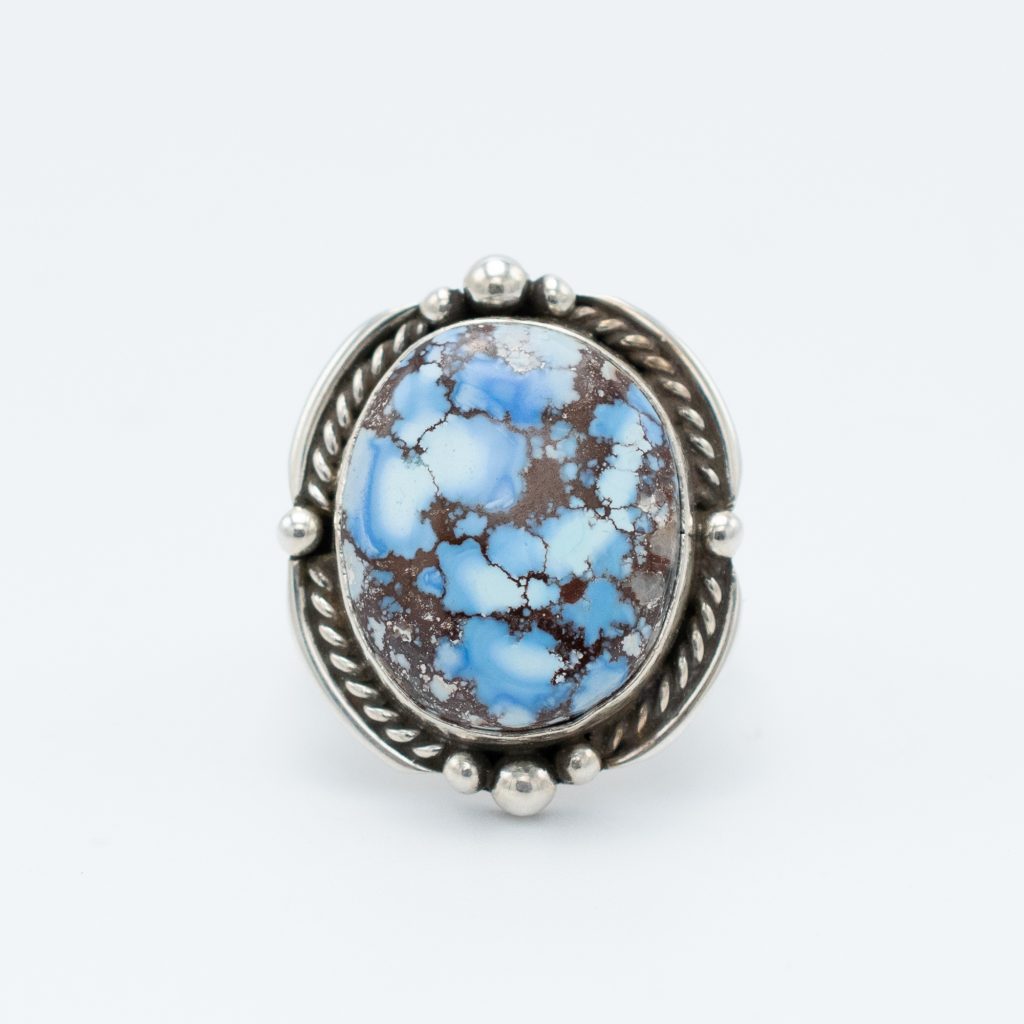
Golden Hill turquoise is mined in the Altyn-Tyube region of eastern Kazakhstan, an area historically known for copper but only recently tapped for its turquoise. Introduced to the U.S. market around 2018, this stone is also called Desert Lavender due to its sky-blue coloring contrasted by a lavender or mauve matrix. Unlike many turquoise sources, Golden Hill turquoise is mined under harsh, seasonal conditions, often in extreme cold, making consistent supply challenging. The mine’s output is relatively low, contributing to the stone’s rarity and high demand.
Golden Hill turquoise is naturally hard, with a Mohs hardness rating between 5 and 6. This durability allows much of the material to be cut and polished without stabilization. Its vibrant color, clean matrix patterns, and ability to take a high polish make it a favorite among collectors and contemporary jewelers alike. Though not historically used in Native American jewelry due to its late introduction, Golden Hill has found popularity with Navajo and Pueblo silversmiths for its bold visual impact and unique coloring. As it becomes more recognized, it continues to rise in value and prestige, particularly among artisans seeking rare, naturally beautiful materials with international origins.