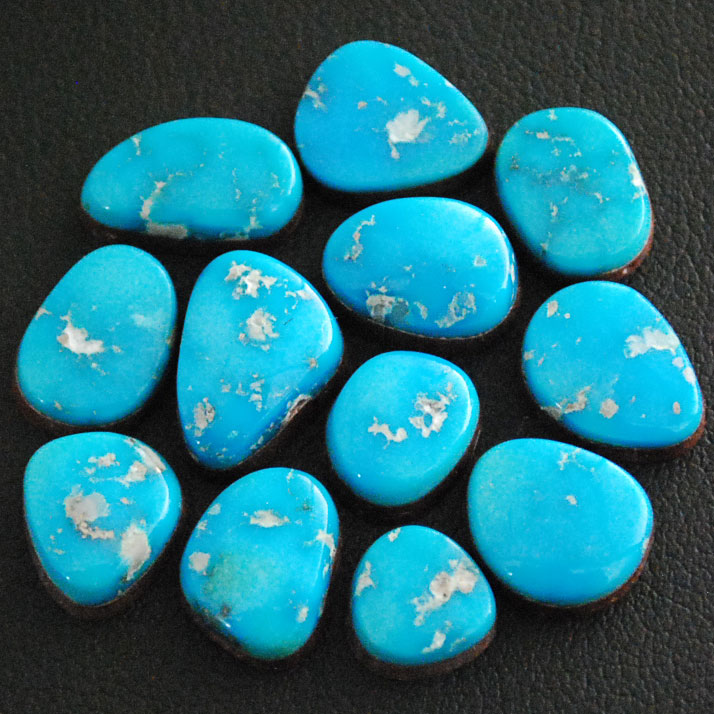
Blue Ridge turquoise, also known as Orvil Jack turquoise, comes from a mine in Lander County, Nevada. It was originally claimed by Orvil and Bessie Jack in 1956. Early material from the mine included vivid blue nuggets and spiderweb matrix patterns, often found in translucent form with dark, contrasting matrix. During the 1980s, Orvil Jack famously uncovered a new variety of turquoise at the same site—an unusual spring green stone that became known by his name. This green turquoise contains higher levels of zinc and has since become highly collectible, especially in the work of Native American artists.
While Blue Ridge turquoise varies in color from sky blue to bright green, much of the material is relatively soft and requires stabilization or enhancement for durability in jewelry. Some higher-grade stones are naturally hard and can be polished untreated, but they are rare. Because of its wide color range and striking appearance, Blue Ridge turquoise has long been favored in Southwestern jewelry.
Today, genuine Blue Ridge turquoise is increasingly rare and sought after by collectors and jewelers who appreciate its bold hues and its place in the history of American turquoise mining.