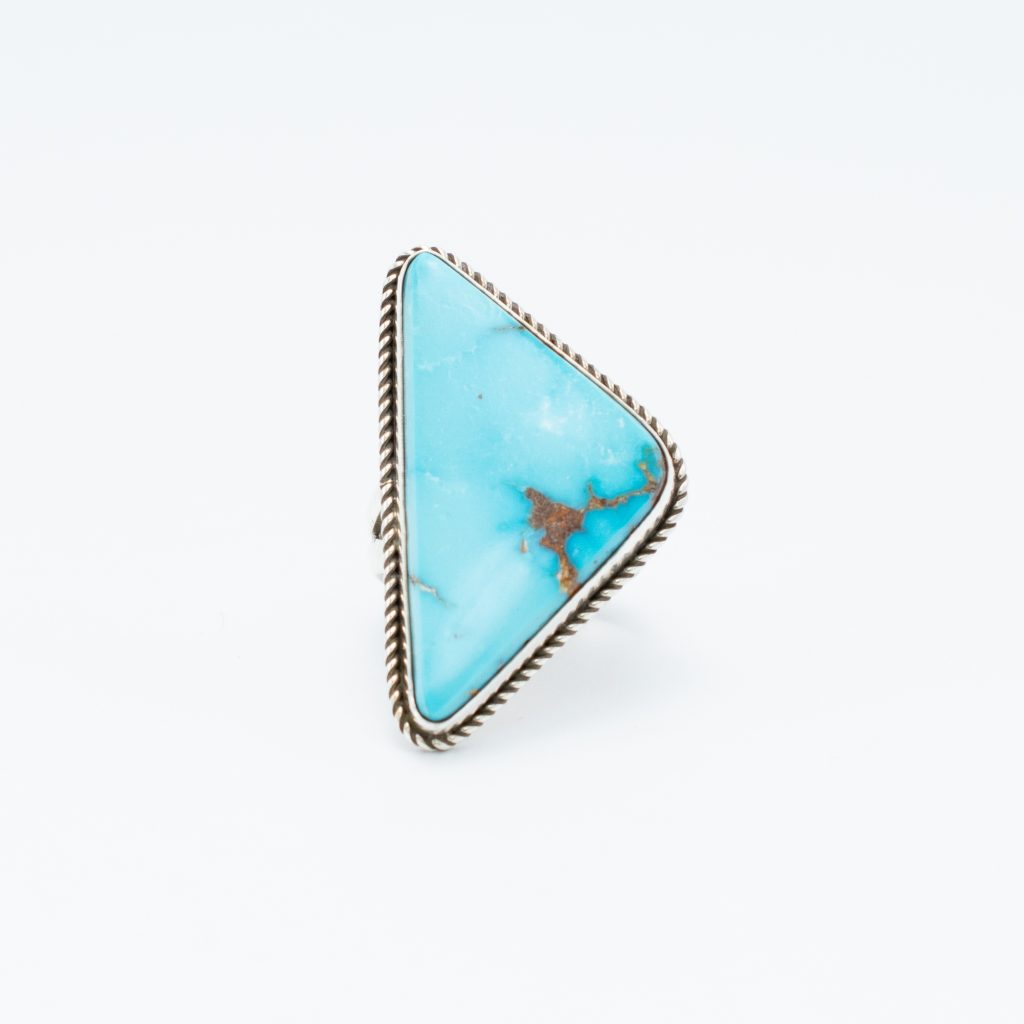
Candelaria turquoise comes from the Candelaria Hills near Tonopah, Nevada, an area mined since the late 1800s. The turquoise is a byproduct of a copper, silver, and gold mining operation, with turquoise occasionally uncovered during exploratory excavation. Known for its intense electric blue hue, this turquoise sometimes exhibits a dramatic spiderweb matrix in red, brown, or black, adding to its allure and rarity. While the mine is not exclusively a turquoise mine, the material that has emerged from Candelaria is regarded as some of the finest from Nevada.
Candelaria turquoise is known for its high silica content, making it naturally hard and capable of taking a strong polish. As a result, most of the high-grade material is untreated, although lower grades may be stabilized. Due to the mine’s limited turquoise yield and sporadic mining operations, authentic Candelaria material has become difficult to find and highly sought after. Native American jewelers, particularly Navajo and Pueblo artists, have embraced its vibrant color for statement pieces, often pairing it with intricate silverwork. Its rarity, combined with a compelling visual appeal and strong connection to Nevada’s turquoise heritage, has solidified Candelaria’s place in the pantheon of collectible American turquoise.